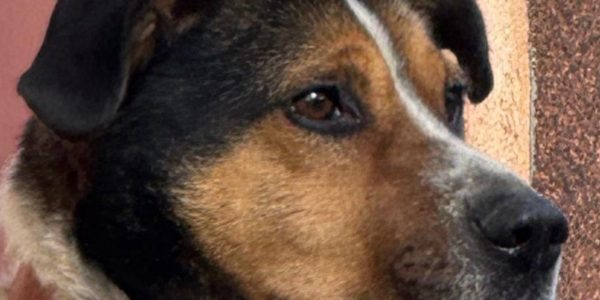
Brussels 02.05.2026 The EU employee Zlatimira Ninova Colova clamed the ownership of Arik, when his treatment was completed, he was vaccinated, and the passport was issued, all paid by the other person (me).
Apparenlty Colova is not hiding that she, and her family (by now late aunt, and late mother) did not bring Arik to a vet in last seven (7!) year once. Although there is a legal obligation for (See Menu above chapter LAW) Bulgarian owners to vaccinate dogs against rabies yearly. And for obvious sanitary reasons there is a fine – approx. €500 euro – for those who fail to vaccinate their dogs.
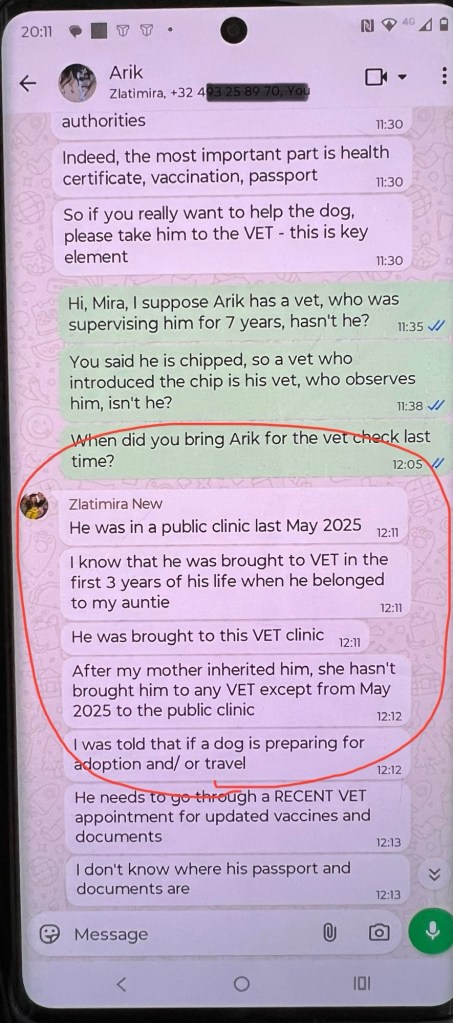
In spite of existing legal frame, the only vet treatment Arik was subjected to was the FREE Municipality programme for stray dogs. Arik was submitted as a stray dog to a shelter to be sterilised (castration), and released (January 31-February 11, 2025). Remarkable, that so called “family dog” of a person, who works for the EU Inisutions for last 16 years, and receives a generous salary of €5K netto/month was surrendered as a stray to profit from the FREE of CHARGE veterinary intervention paid by the European tax-payers.
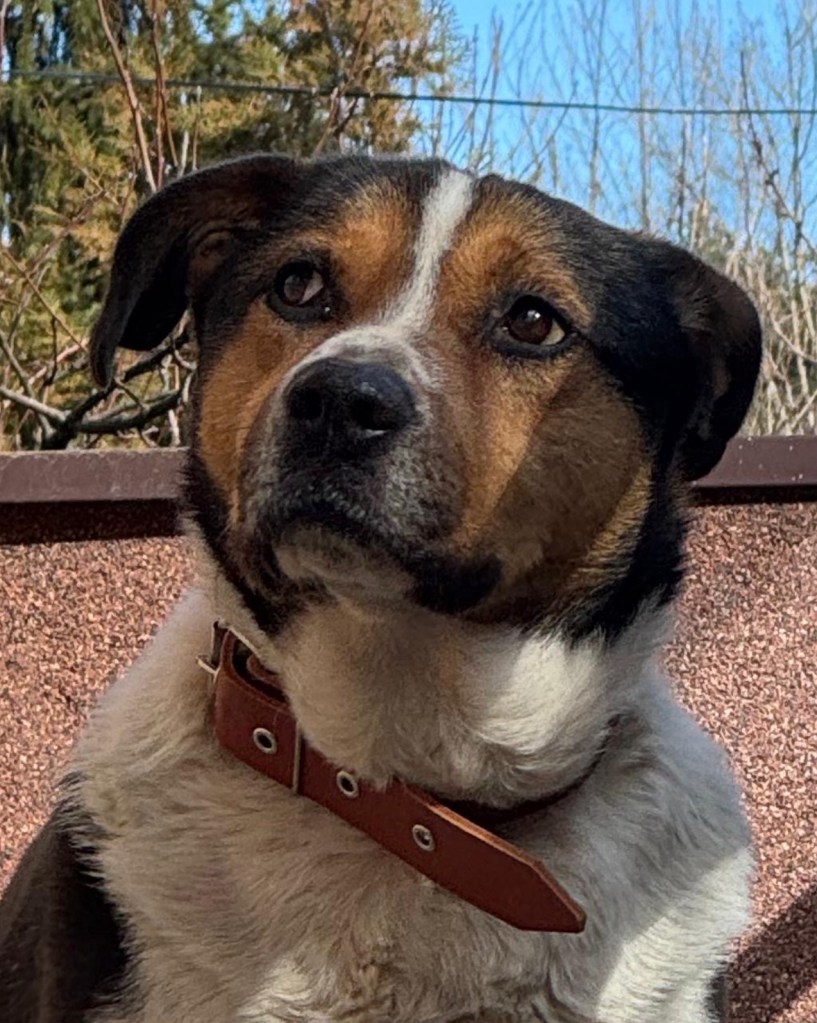
PS. Zlatimira Colova doesn’t know that there are no “public clinics” where dogs are treated FREE of CHARGE. All veterinary clinics are “public”. Free of charge Municipality programme is aimed to help sterelizing stray dogs.
Owners, expecially those with handsome EU institutuions salaries like Zlatimira Colova ( €5K netto/month) , are supposed to pay for veterenary services themselves. They are not supposed to profit from tax-payers funds.
Free dog sterilization programs funded or supported by European Union initiatives, NGOs, and municipal collaborations, are designed to benefit a broad range of stakeholders, specifically focusing on reducing overpopulation and assisting low-income communities.
Key Beneficiaries of Free Dog Sterilization Programs:
- Low-Income Pet Owners: Families or individuals facing financial hardship can access free or heavily subsidized spay/neuter services for their pets to avoid the high costs of veterinary care.
- Stray Dogs & Unowned Animals: Programs specifically target strays to prevent further abandonment and improve the health of the stray population.
- Local Carers and Rescuers: Individuals and NGOs working to manage street dog populations, often using Catch-Neuter-Vaccinate-Return (CNVR) methods, benefit from funded sterilization, which directly manages animal population numbers.
- Shelters and Rescue Organizations: By reducing the number of unwanted litters, these programs ease the strain on shelter capacity and resources, helping organizations manage stray populations more effectively.
- Municipalities and Communities: Local governments benefit from decreased pressures on local resources and improved sanitation, as well as reduced public health risks. [1, 2, 3, 4, 5]
Key Contextual Factors:
- Targeted Areas: Programs are commonly focused on regions with high rates of stray animals, particularly in Eastern Europe (e.g., Ukraine, Romania), often through partnerships between international animal welfare NGOs and local veterinary services.
- EU Strategy: The EU aims to enhance animal welfare, which includes encouraging the responsible keeping of pets and promoting sterilization, particularly for animals in shelters.
- Regional Bonuses: Some areas, such as the City of Brussels, offer monetary bonuses directly to owners to offset the cost of sterilizing their pets.
- Eligibility Criteria: While some programs are universal in specific target areas, others may require proof of low income, or that the applicant is a carer for specific stray animals.
 SAVE ARIK